Drive components for process engineering and the chemical industry
The transformation of solid, liquid or gaseous substances is the core competence of process engineering. This transformation of materials is achieved using physical, thermal or chemical processes. This places high demands on the drive components used.
Welded stainless steel bellows couplings enable precise adjustment processes for electrically driven butterfly valves
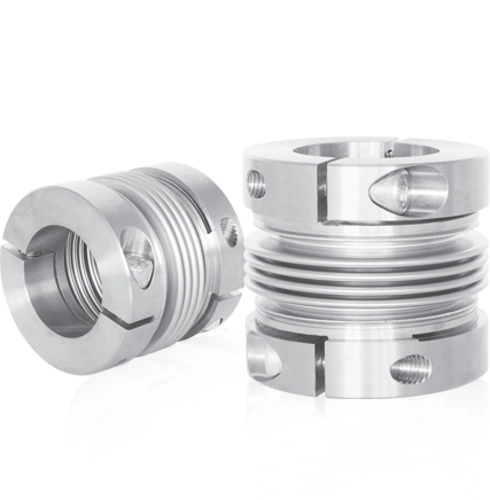
In many areas of plant engineering and process engineering, butterfly valve adjustments play a major role in the supply and return of liquid or gaseous media. Due to the media temperatures, high ambient temperatures occur in these applications.In such electrically driven butterfly valves, GBC metal bellows couplings from the Belflex Thermbago range are used. The functional element of these couplings is a stainless steel bellows welded to the stainless steel hubs. This process ensures that the bellows remains permanently connected to the hubs even under the required critical temperature conditions.
Stainless steel multi-disc coupling aid heat transfer in temperature control units
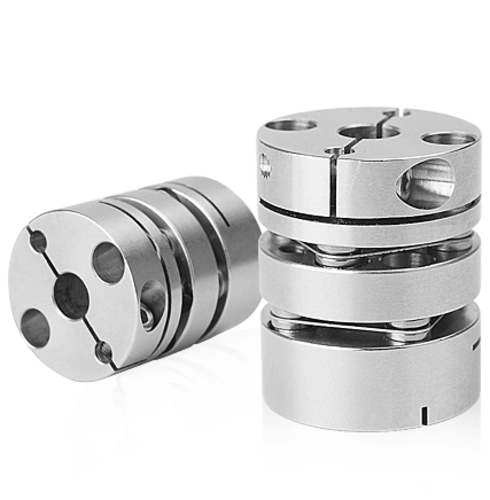
In a wide variety of manufacturing processes, heat plays a crucial role in transforming raw materials into a state suitable for further processing. In the plastics industry, for example, raw materials in granule form are converted through melting processes into a form suitable for further processing in extruders and calenders. Tempering units, which supply heat to the actual manufacturing process, are an integral part of these production facilities. Depending on the application, various fluids such as oil or water are used as the tempering medium for transporting thermal energy. In such systems, stainless steel multi-disc coupling from the Diskflex GDC series, in a double-cardan design, ensure precise torque transmission. These multi-disc couplings utilise torsionally rigid and flexurally elastic discs made of stainless steel. These are bolted alternately to the respective hub and the spacer. In this series, the hubs and the intermediate piece are manufactured in a double-cardan design from stainless steel. The positive-lock clamping hubs ensure backlash-free torque transmission even during reversing operation. For additional, more specific mounting or installation conditions, the product range also offers models with clamping hubs in a half-shell design, which allow for radial mounting. Furthermore, the compact versions of the ZDC coupling series provide solutions for particularly confined installation conditions.
Precision high-temperature coupling for industrial steam generation
Whether for the sterilisation and disinfection of equipment and apparatus or the provision of process heat in plant engineering – thermal energy is required for these tasks everywhere. This involves generating a considerable amount of steam. Industrial steam generators are designed precisely to meet these requirements. They produce this energy medium efficiently and powerfully for cleaning and manufacturing processes. A coordinated design comprising a pump as well as a boiler, heating and evaporation system ensures high steam quality. For applications with stringent hygiene requirements, these systems are available in stainless steel. It is in such a system that the Belflex Thermbago metal bellows coupling really comes into its own.
Bevel gearboxes and load-disconnecting torque limiters for process engineering applications
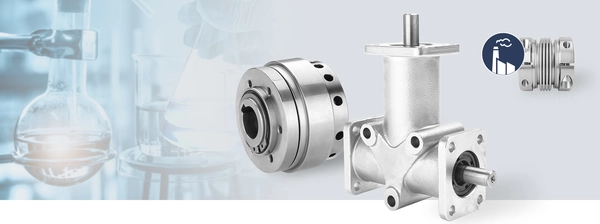
The Gearmax 5000 range of stainless steel bevel gearboxes is designed for use in specific environmental conditions. To meet the high standards and hygiene regulations in the chemical and petrochemical industries, the housings and shafts are manufactured from 1.4401 grade stainless steel. The GLEASON spiral-toothed bevel gears ensure smooth running and high efficiency. All bevel gearboxes are lubricated for life ex works.
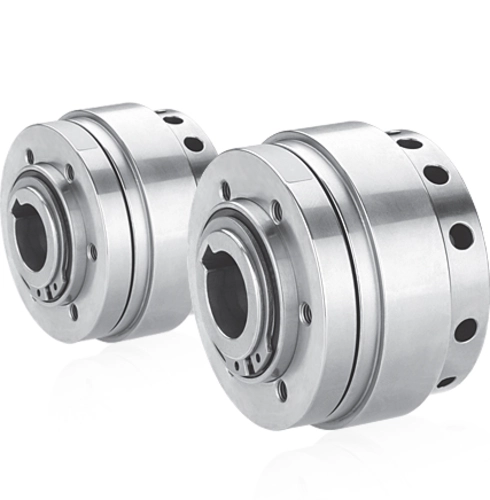
The Securmax Servo DSS/SG/N/Inox stainless steel zero-backlash safety clutch is designed for servo applications in corrosive environments or in applications with high hygiene requirements. It reliably protects process plant equipment against sudden, unintended torque peaks. Torque transmission in these load-disconnecting torque limiters is achieved by positive engagement via balls, which are pressed into recesses by a set spring force. If the torque limit is exceeded, these locking elements disengage from their recesses against the spring force, thereby interrupting the torque.